Dependent resources
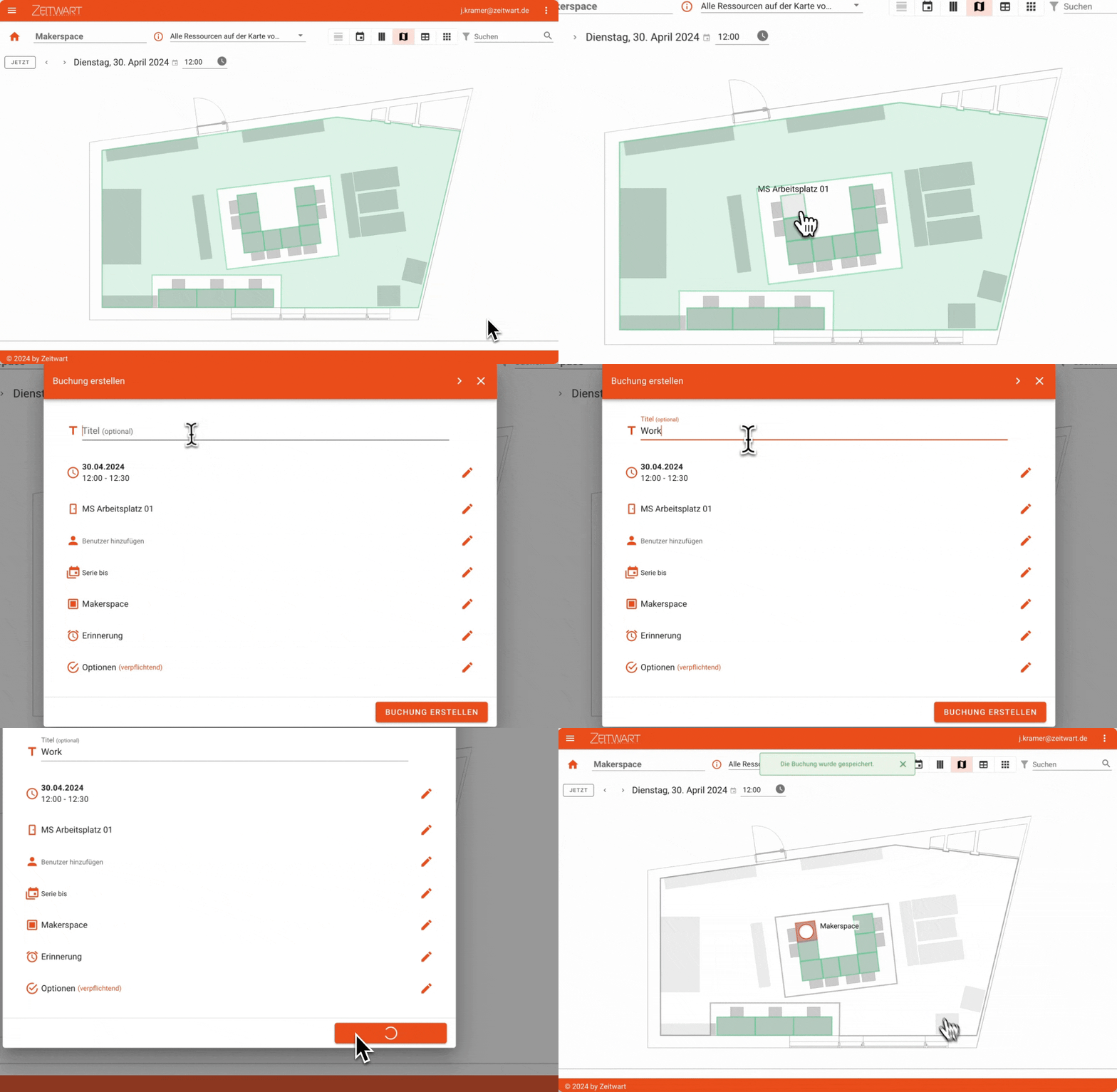
A room full of bookable desks – as a whole or seat by seat, never twice.
Some rooms are more than a room. A computer lab can be booked as a whole for a class – or seat by seat by individual students. Both at the same time must not happen. Dependent resources model that relationship so that nobody has to remember it.
How the dependency works
You give the individual desks the room as their parent resource. Two directions follow from that, and Zeitwart serves both automatically:
If the room is booked, Zeitwart creates bookings for every desk inside it. The lab is then fully occupied.
If a single desk is booked, a dependent booking appears in the room. The room can no longer be booked as a whole, while the remaining desks stay free.
Typical cases
computer labs and study rooms used as a whole for courses and individually for private study
open-plan offices with flexible desks that are occasionally needed as a project room
library areas with individual study places and group bookings
workshops whose machines are allocated individually or as a whole floor
Why this is more than a rule
A booking rule could forbid double occupancy but not resolve it. The dependency actually creates the matching counter-bookings – they are visible, they appear in calendars and reports, and they disappear again when the triggering booking is cancelled. Occupancy stays honest instead of merely being prevented.
Benefits at a glance
a room can be allocated as a whole or seat by seat, with no double booking
Zeitwart creates the dependent bookings automatically in both directions
counter-bookings are visible and feed into calendars and statistics
cancellations dissolve the dependent bookings along with them
desks count as a quarter of a licence point, which keeps desk sharing cheap